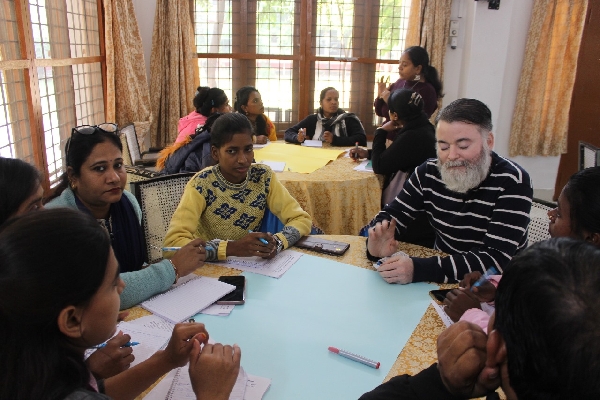
Building upon three decades of rights-based work among Dalit communities, founding members set up the Centre for Social Equity and Inclusion (CSEI) in 2009 to deepen democracy and development in our body politic enhancing the enjoyment by socially excluded communities of their social, economic and cultural rights. CSEI is a people-centred organisation committed to advancing social equity and inclusion for Dalit, Adivasi, minority and other marginalised communities (MCs), with key focus on young people.
The approach includes two core dimensions -
i) Make visible and strengthen the critical and sustained interventions of community-led organisations (CLOs) in reaching the ‘last-mile-communities’
ii) empower young people from Socially Excluded (SE) communities through enhanced opportunities for learning and leadership and contribute to the empowerment of their communities and a more just and inclusive society.
Over the years, we have consistently evolved our work, keeping an ear to the ground to triangulate contextual challenges faced by young people from these communities with opportunities, resources and networks to create a more humane and inclusive world. In 2011 CSEI initiated forums for youth from marginalised communities in Bihar. In 2013, a first of its kind, we undertook in-depth study detailing 175 community led organisations (CLOs) led by marginalised community leaders across 9 states.
Through the 2010s we expanded youth-led forums and campaigns to Uttar Pradesh and Delhi. From 2015, we promoted the implementation of the RTE Act, with special focus on section 12 1(c) for the inclusion of children from DA/EWS sections in private schools. Since 2018, we partner with the UN on Citizen Generated Data (CGD) facilitating marginalised youth fill data gaps for evidence-based advocacy. In 2020, CSEI launched the Girls’ Learning and Leadership Programme (GLLP), a peer-led model empowering adolescent girls as “Girl Champions” to promote girls’ agency.
CSEI is recognised for its rights-based, youth-centric approach, fostering youth leadership, influencing policy dialogues and partnering with CLOs and global SDG platforms. Each milestone has reinforced our core belief: that empowered young people from excluded groups can drive social transformation.
Appeal
The project will be implemented in areas with high concentrations of Dalit, Adivasi (tribal), and Muslim populations (Purnia, Shravasti, and Wazirpur). These communities have faced generations of marginalisation, reflected in:
o Very low literacy and education access, especially for girls.
o Caste, tribe and religion-based discrimination in schools and society.
o Geographical isolation and poor infrastructure limit exposure to quality education.
o Weak linkages to public services and institutions result in multi-dimensional poverty, poor educational attainment, and limited career progression.
The approach in this phase is more holistic, addressing change across three dimensions – agency, relation, and structure – to ensure lasting impact
• Increase Education Access and Achievement: Support marginalised youth to complete secondary education (Grade 10) and successfully transition into higher education, vocational training, or employment. This objective continues to serve the original target group of excluded adolescents but also extends to new youth facing dropout or low achievement. By ad-dressing issues like school dropout, learning gaps, and limited aspirations, the project benefits both phase-1 participants (ensuring they reach the next milestone) and new entrants.
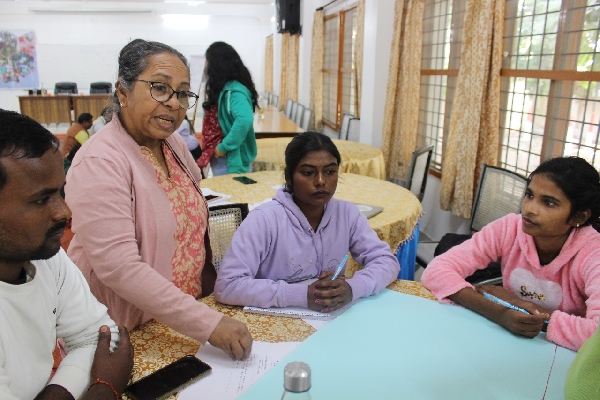
• Strengthen Community Leadership and Rights Awareness: Train and mentor 30 local volunteers (“Edupreneurs”), especially young women (at least 70%), to manage the CLRCs, mentor younger adolescents, and promote awareness of education, gender rights, and social entitlements.
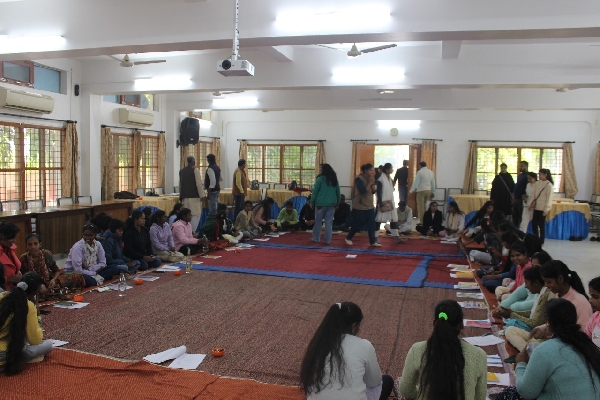
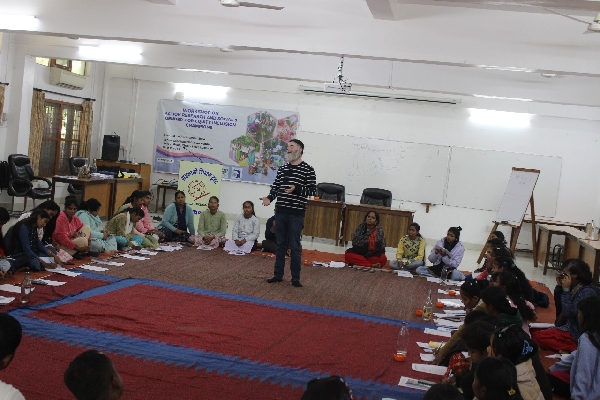
At the core of the initiative are the Community Learning and Resource Centres (CLRCs) which remain safe, inclusive spaces for academic learning, leadership development, and community mobilisation. These CLRCs enable transformation at three levels:
• Agency: enhancing the self-confidence, skills, and leadership capacity of marginalised youth (so that girls and boys believe in their voice and potential).
• Relation: strengthening supportive relationships with peers, family, and the broader commu-nity (creating an enabling environment around the youth).
• Structure: building linkages with formal institutions like schools, panchayats (local councils), and government schemes (so that systemic barriers are addressed and youth have access to their rights and entitlements).
By continuing work with the Dalit, Adivasis and Muslims communities and simultaneously incorporating new groups, this phase ensures continuity while deepening and broadening impact. Marginalised youth who have already begun their journeys are supported to reach further milestones, and new youth are allowed to start on a pathway to become confident, informed, and active agents of community change.
 Education